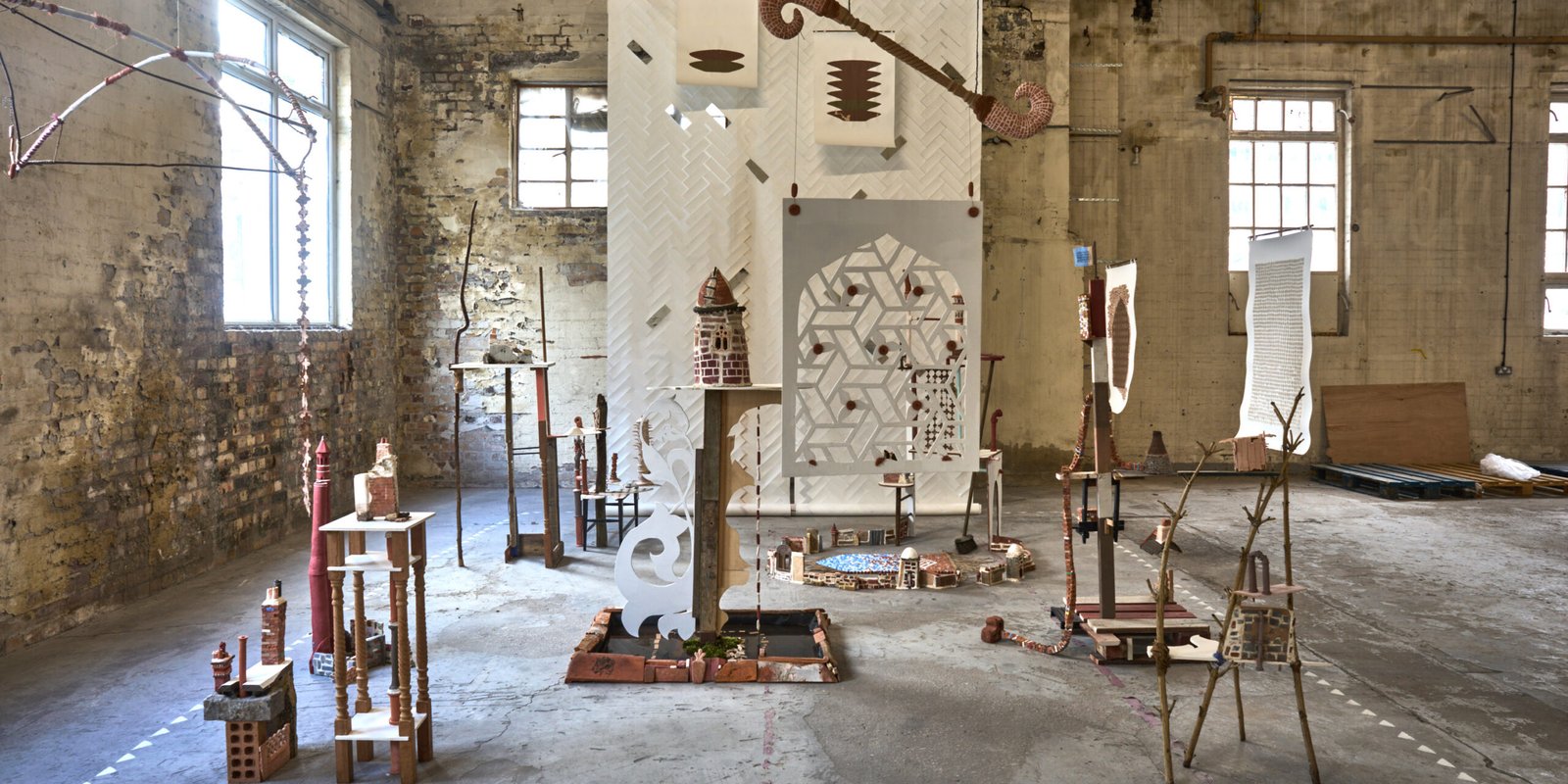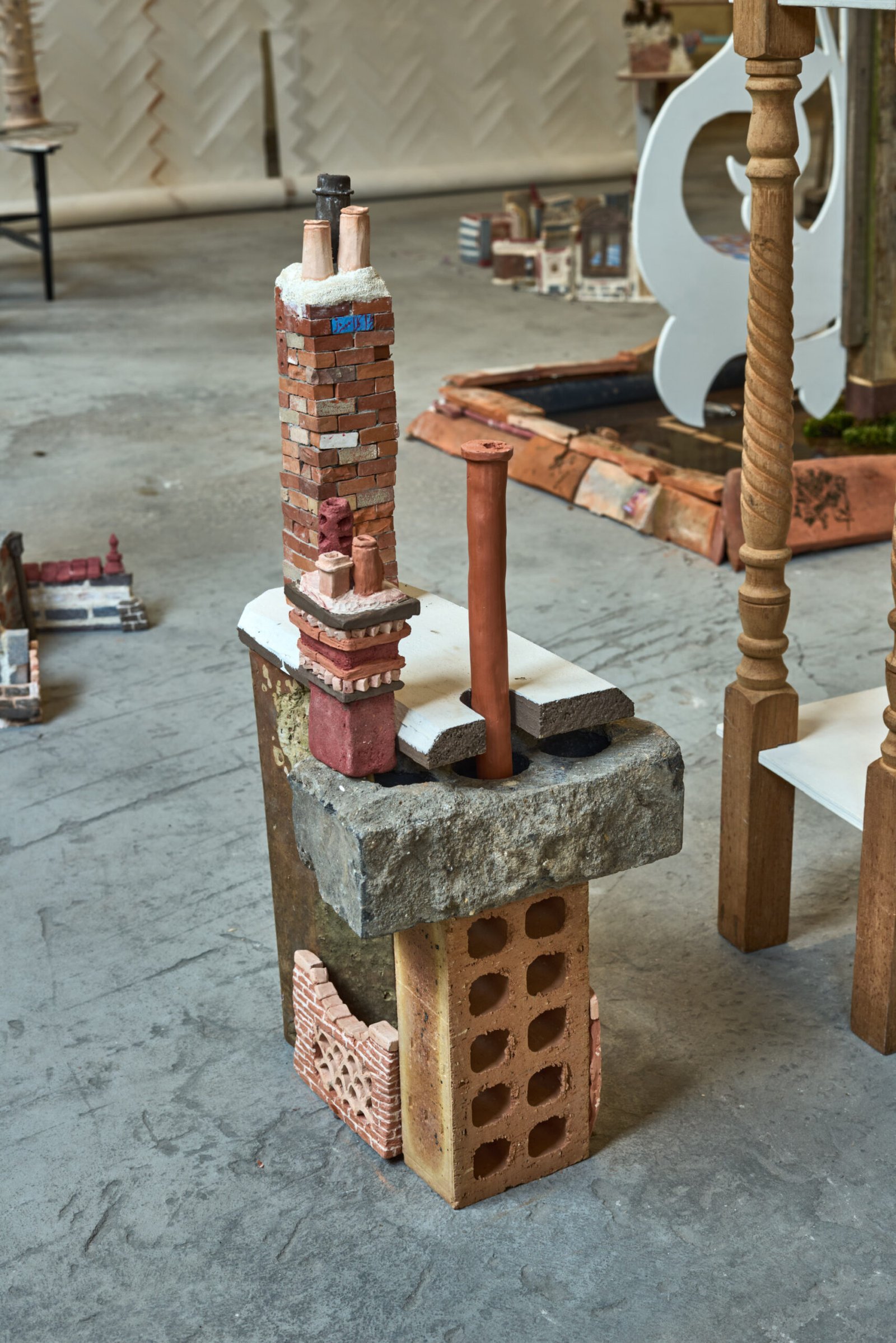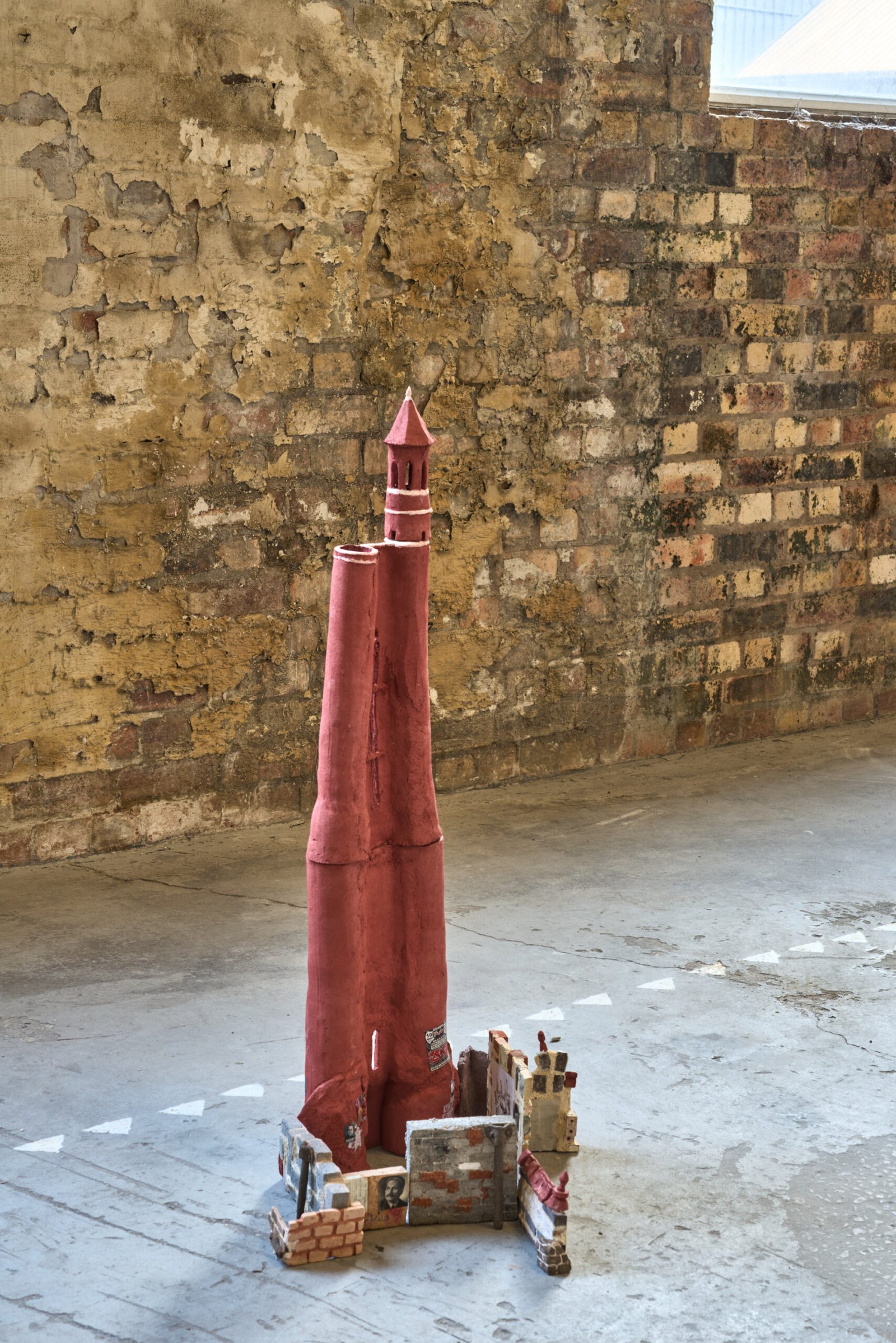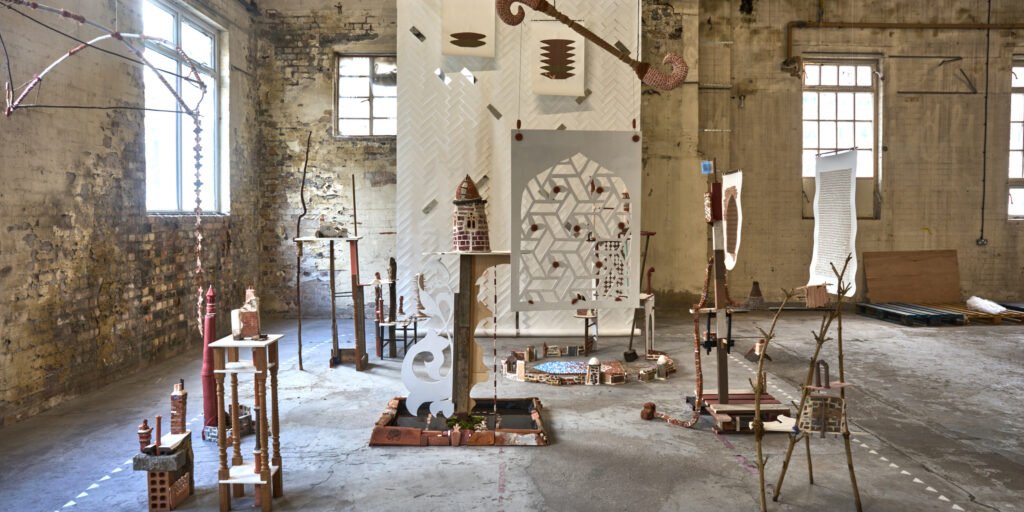
This work, “Existing to be Removed”, emerges in the context of considerable social upheaval both locally and internationally. The recent closure of Royal Stafford in the wake of rising energy costs and broader global commercial changes entailed job losses for 84 skilled workers. Like the ceramics tableware industry, the cost sensitive construction world has seen traditional brick making and bricklaying replaced with metal and cement buildings with decorative facings. Living traditions of ceramic production shift with the times.
Noor Ali Chagani and Clio Lloyd-Jacob’s piece is rooted in the forms and functions of brick and clay architecture in domestic, sacred and public spaces. We are highlighting both the cultural inheritances held in building patterns, and the security, transformation, and containment that we seek from built environments.
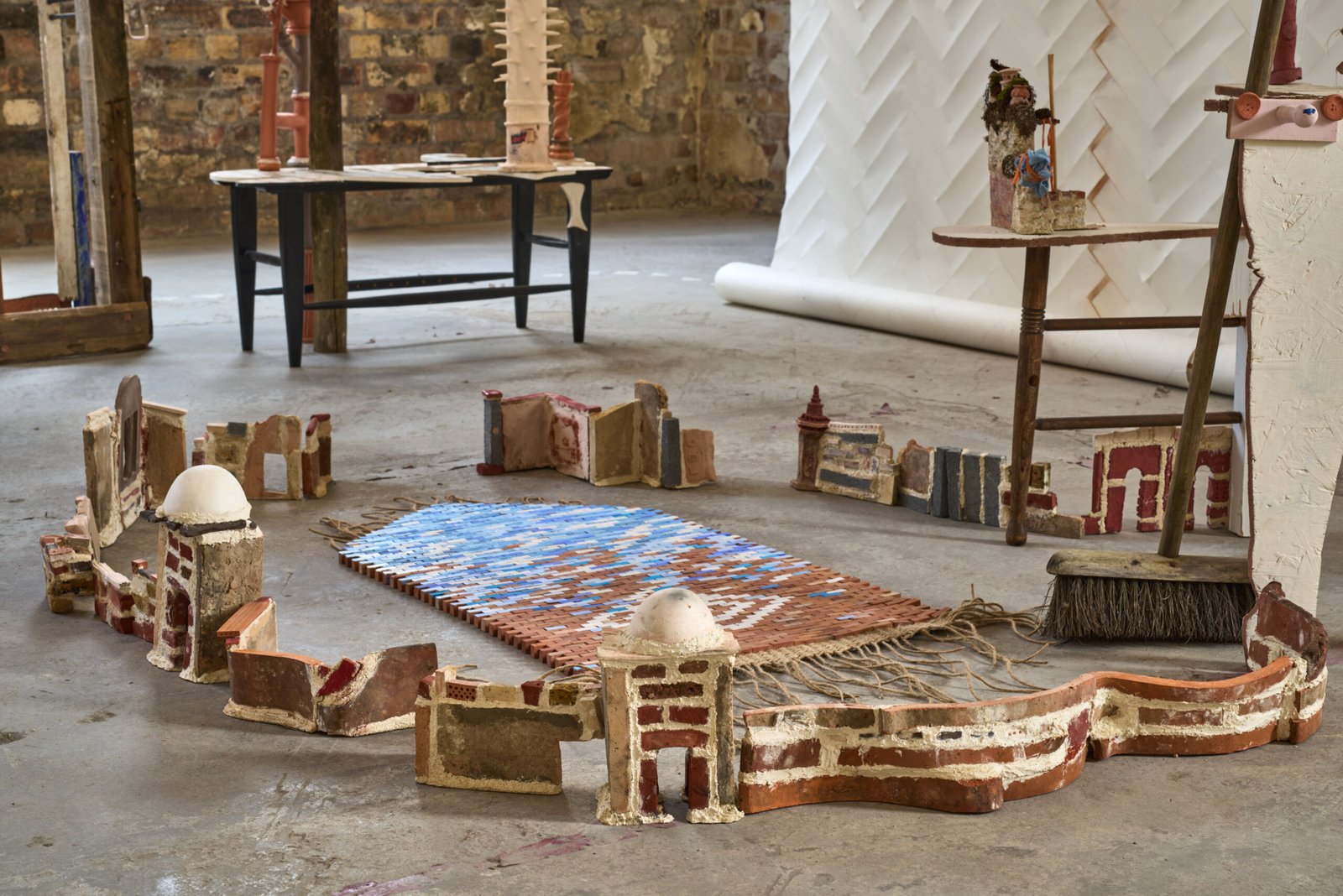
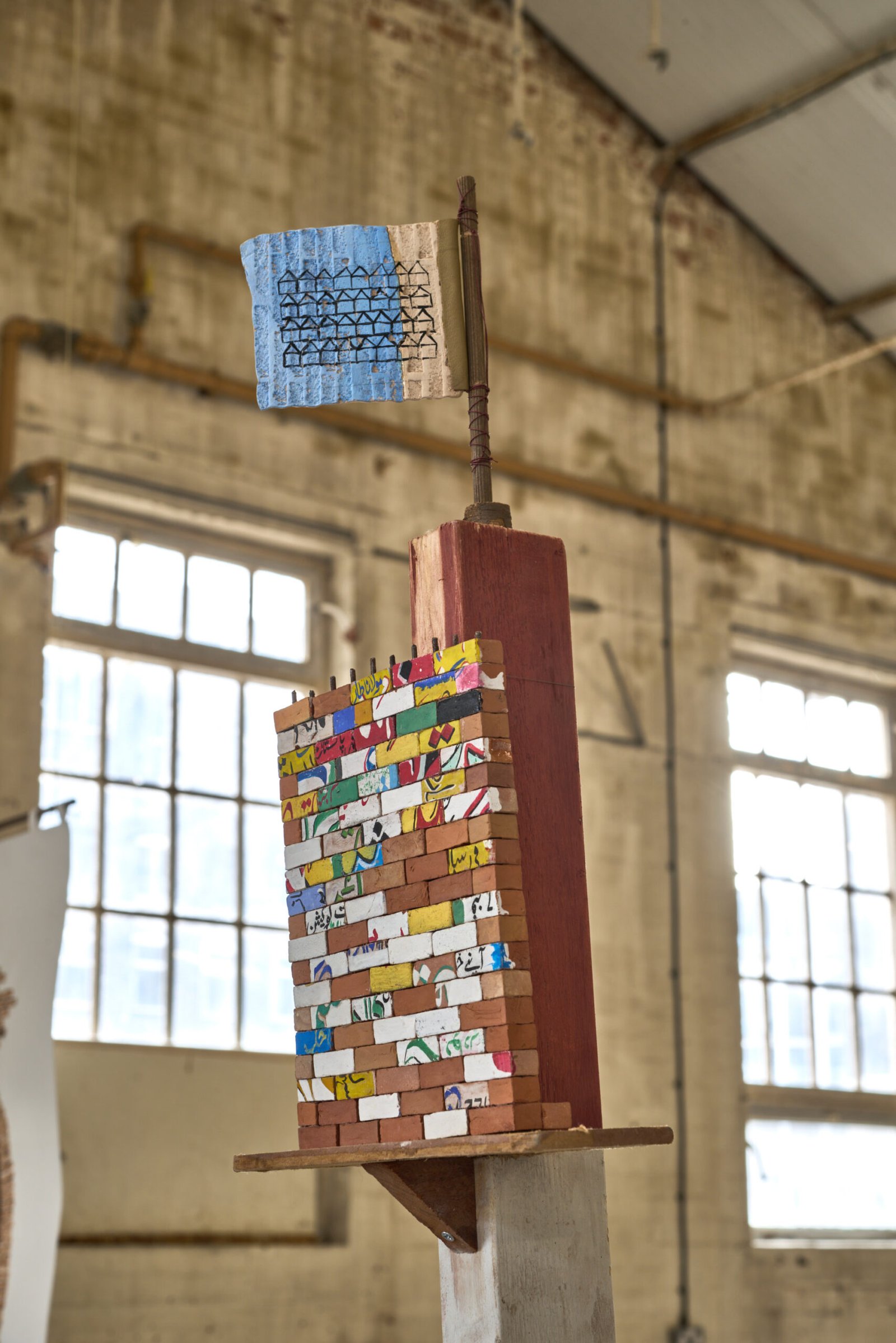
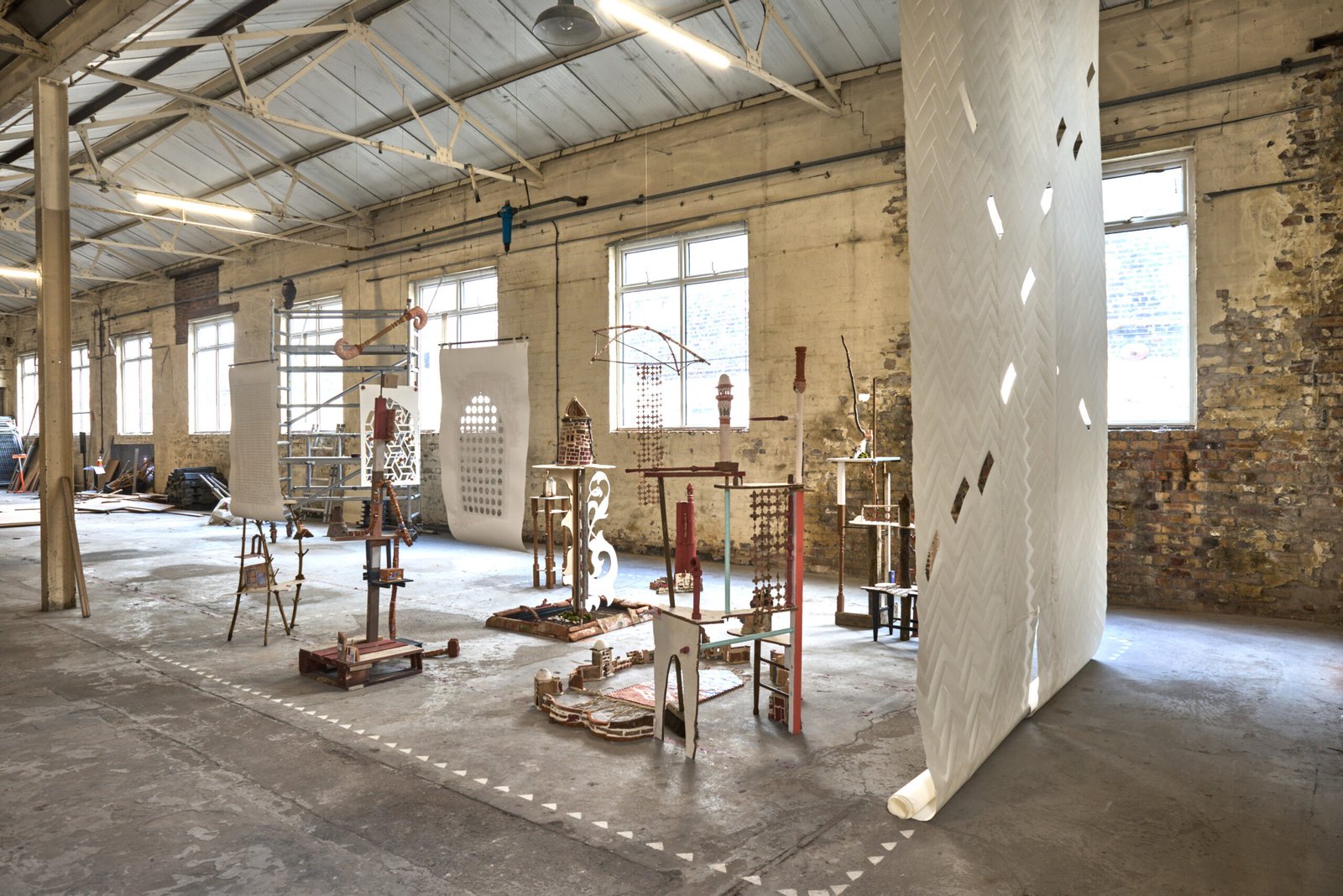
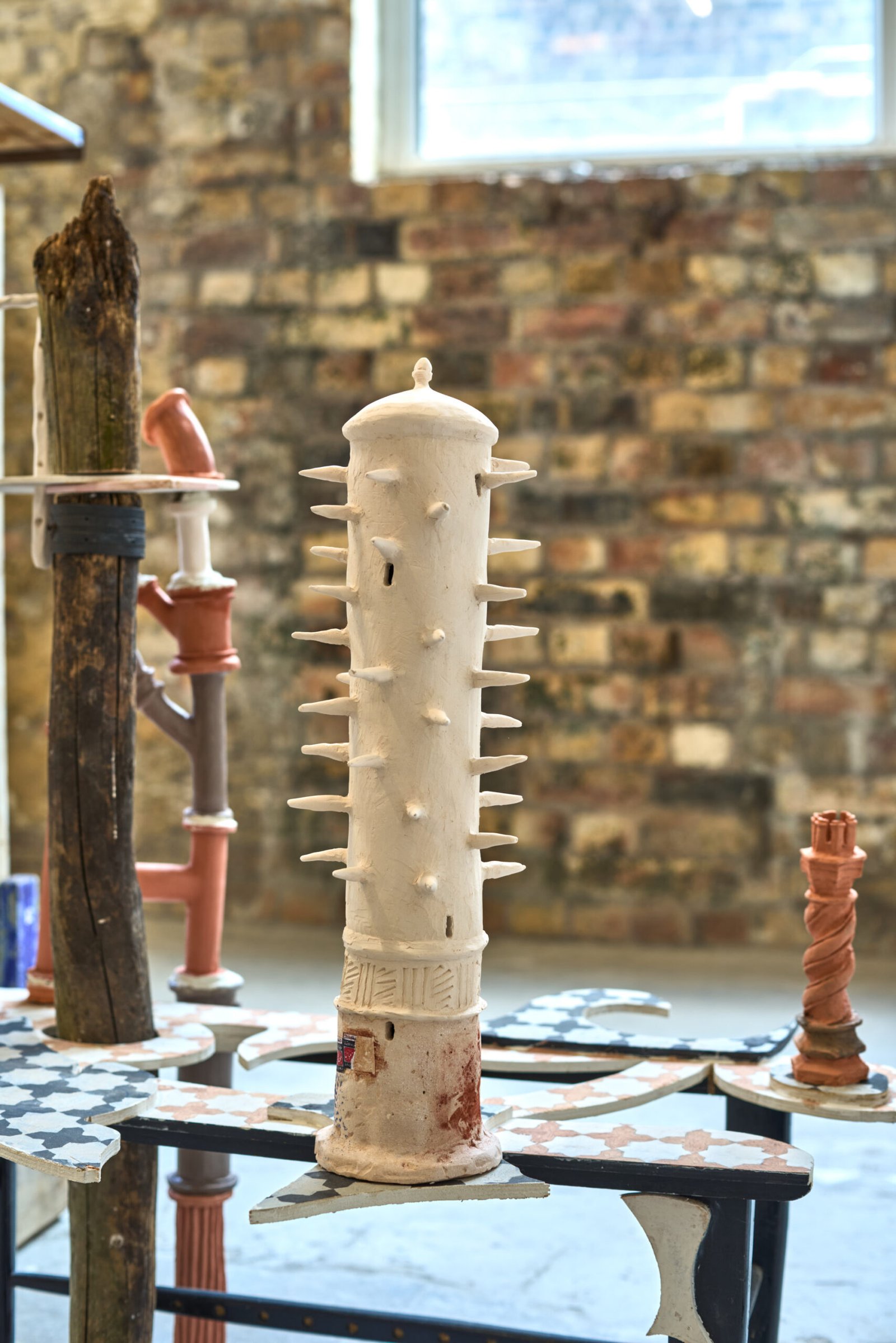
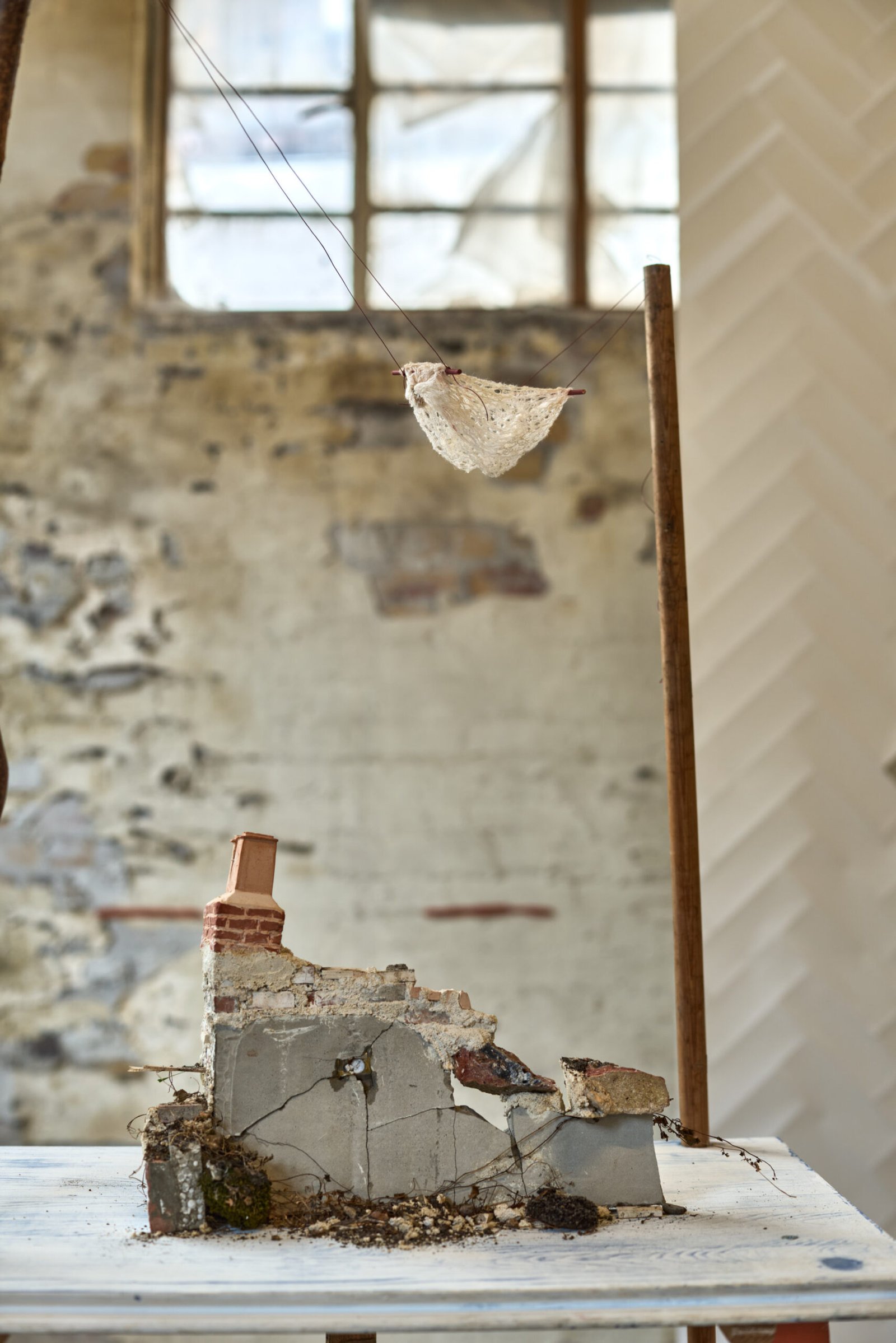
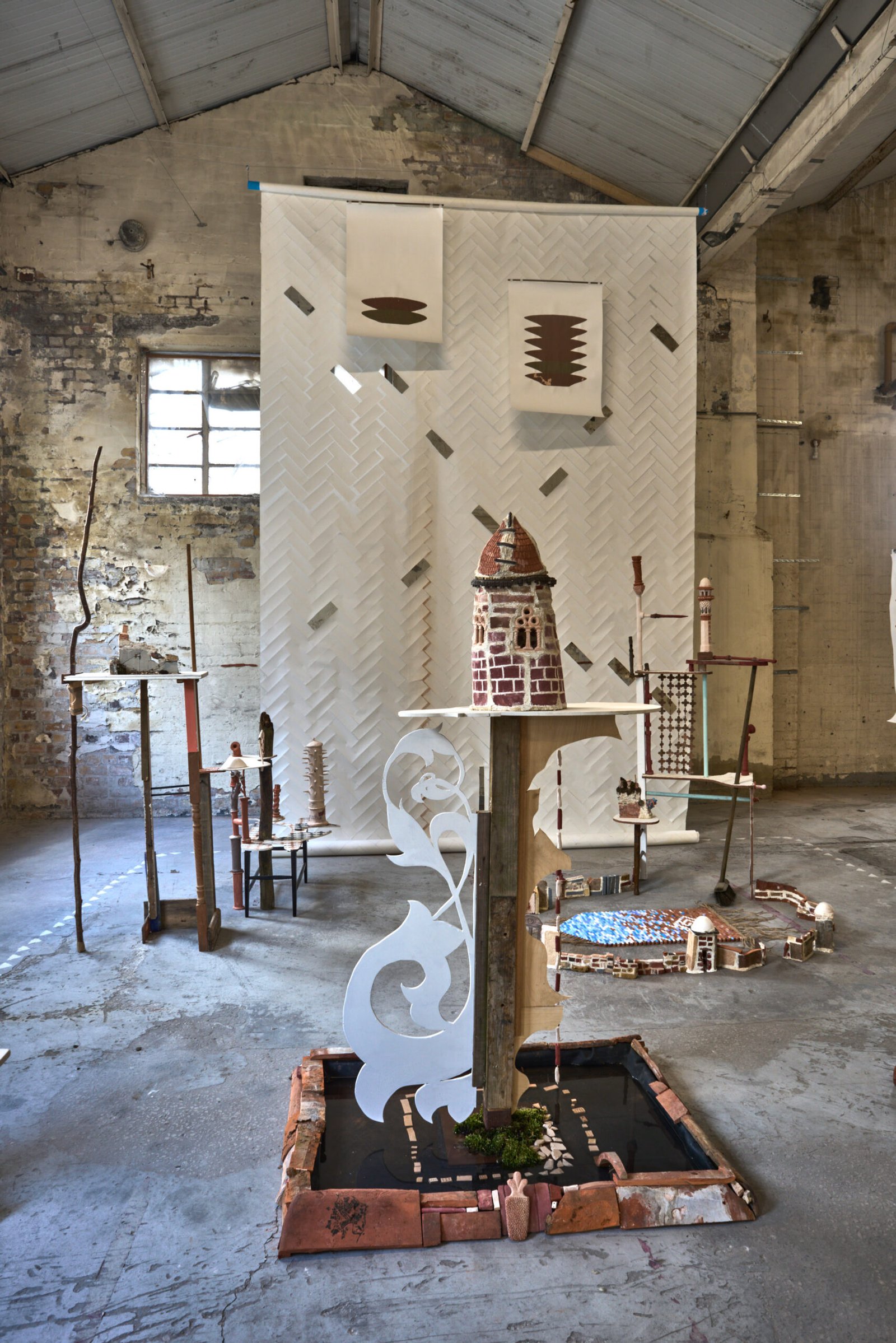
No soil is without history, and human constructions are built on the history of others’ work. In response to this, we are creating an installation of hand built, precarious scale models interpreting existing buildings from our broad cultural heritages. Rather as children play with small world equivalents to explore social patterns and their place within these, we arrange our fragments on a plaza for viewers to ponder and make their own connections. The pavement is Itself constructed of cut up and reused bricks set into new patterns.
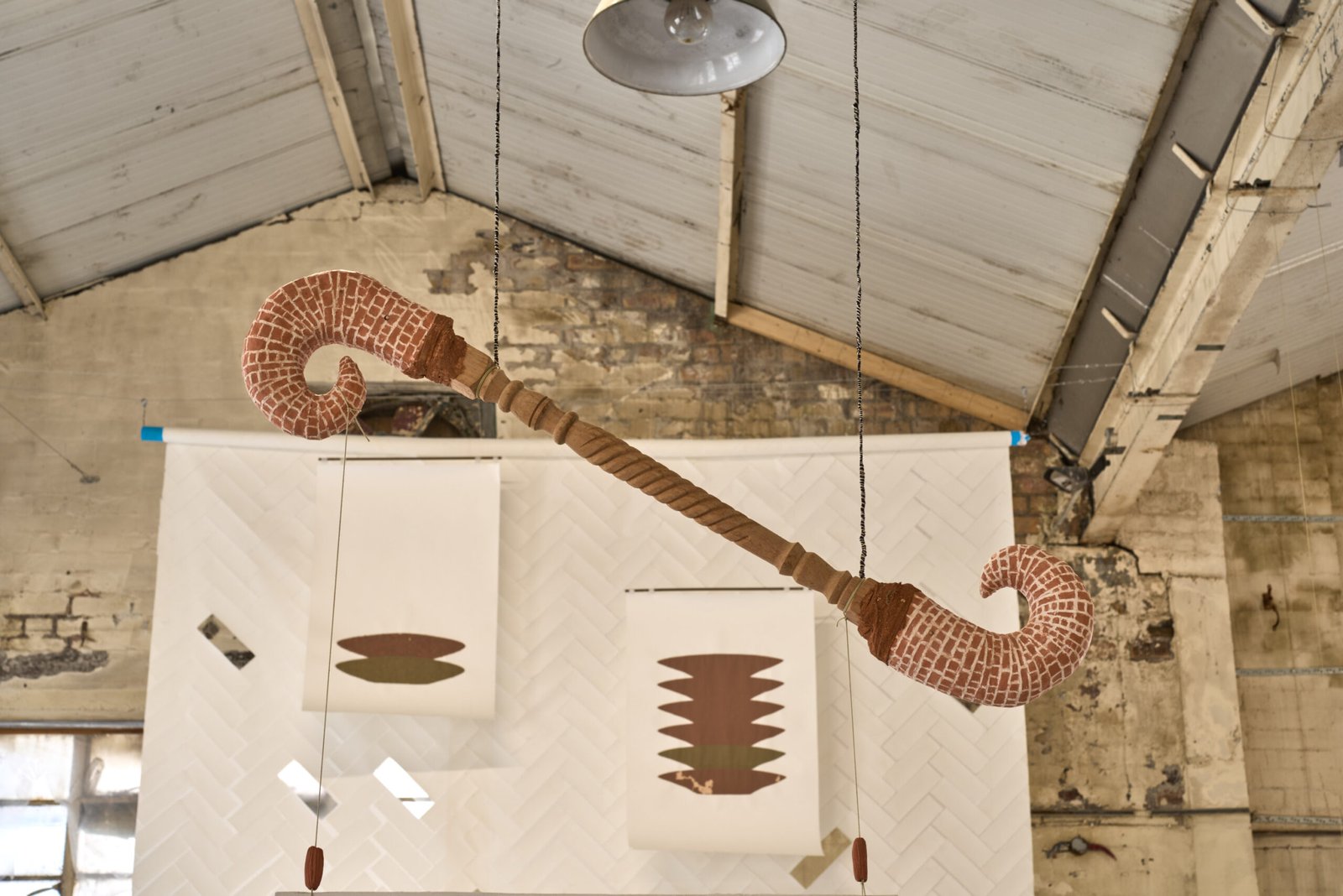
The built fragments, resonant of endurance and connection across time and change, are seen in tandem with a large-scale drawing made using clay on paper. With slip as a pigment, and careful mathematical measurement and calculation, Noor Ali Chagani is recreating a complex Islamic design. Currently, Chagaini is developing a paper Jali (brick or stone pierced patterned screen), which can be thought of as representing the space between man and God. The screen means that we see only part, much is hidden, light permeates, air circulates. While we ourselves cannot cross into this world, our imaginations are invited to.
This drawing changes the viewer’s relationship to the ceramic building fragments. By rendering viewing more complex, and filtering projected lighting, it suggests spiritual contemplation of this material and its evolving place in our current world.
Photograph: Noor Ali Chagani and Clio Lloyd-Jacob, Existing to be removed, 2025, installation. Photograph by Tom Mannion.