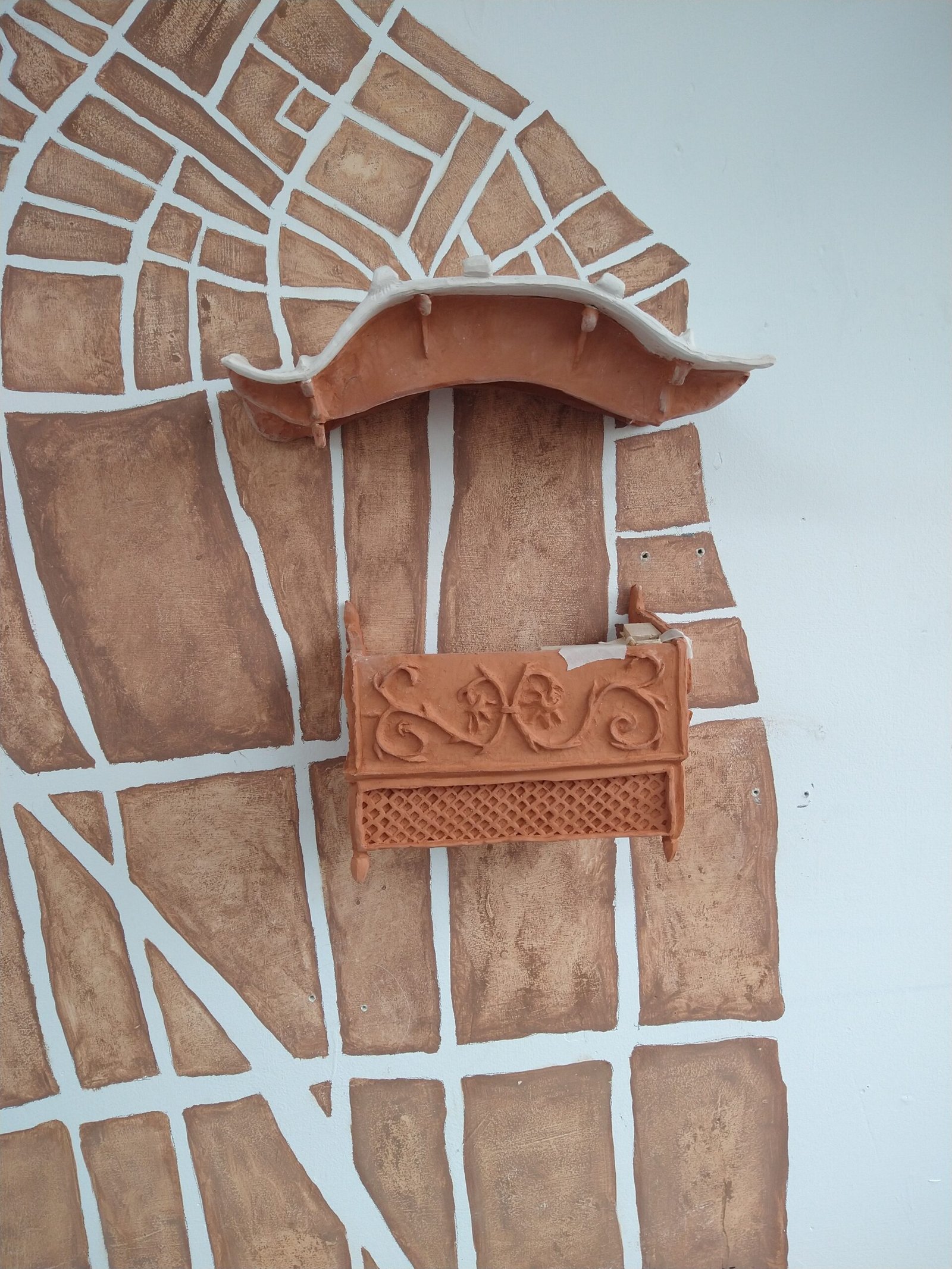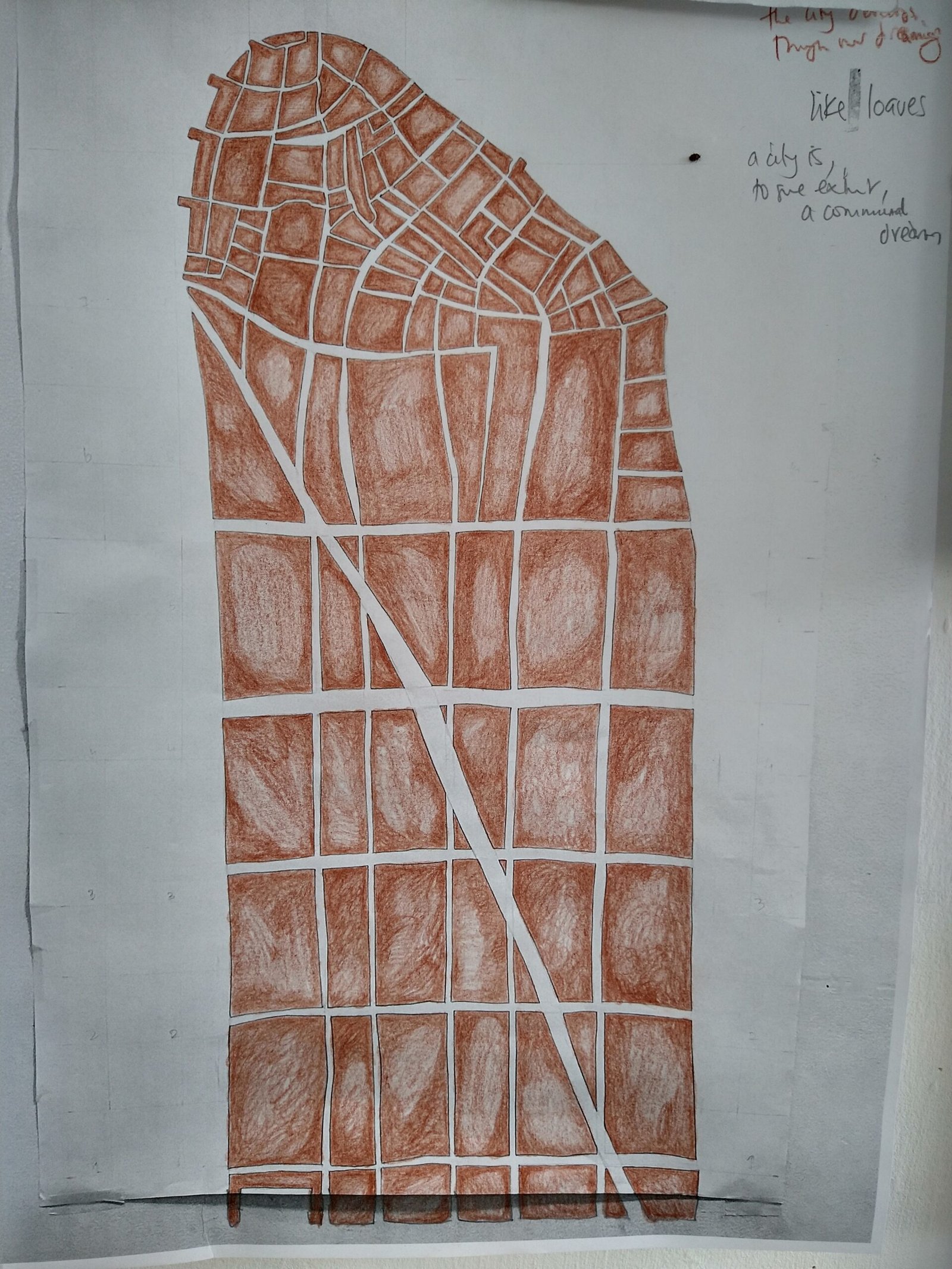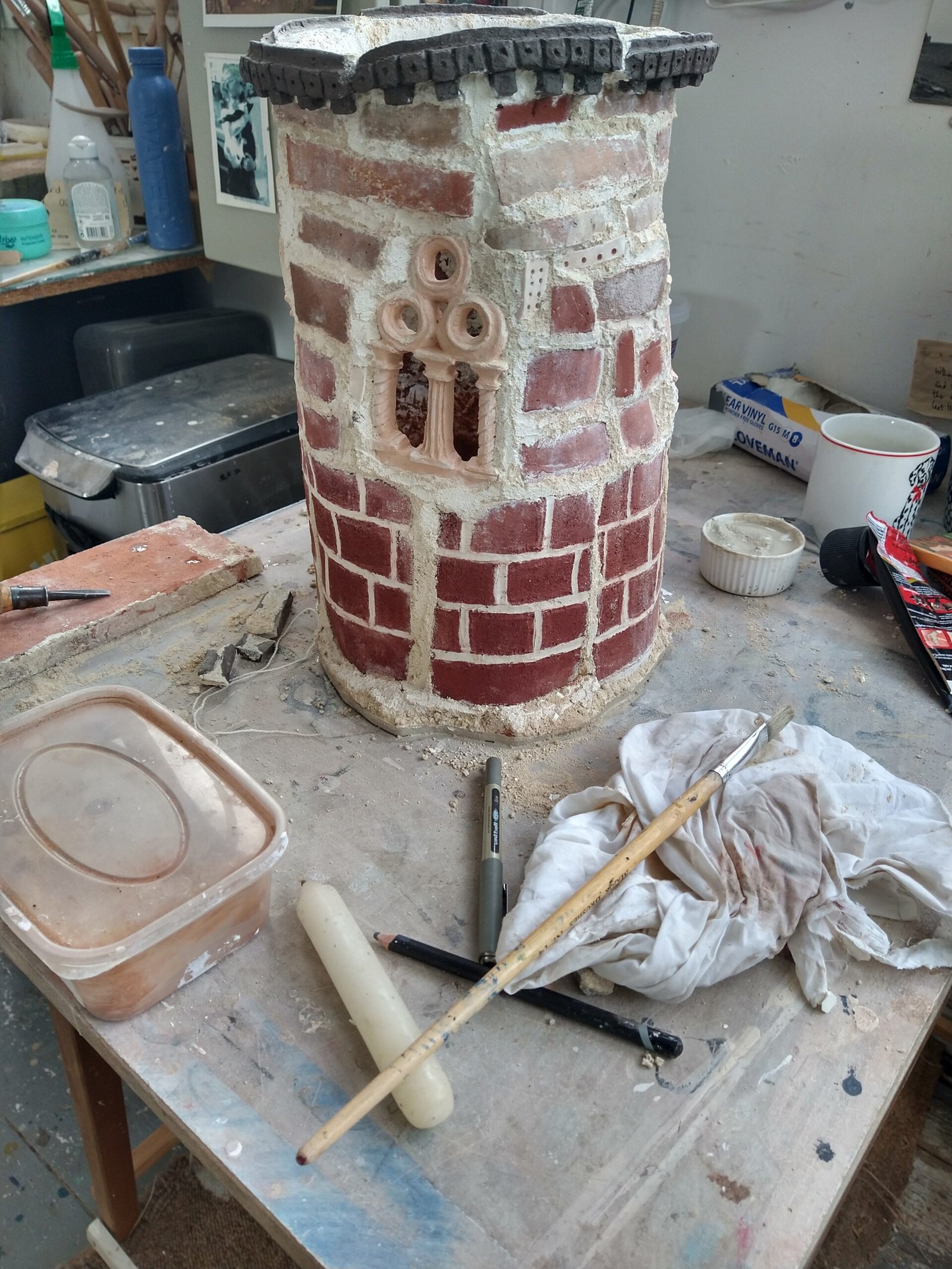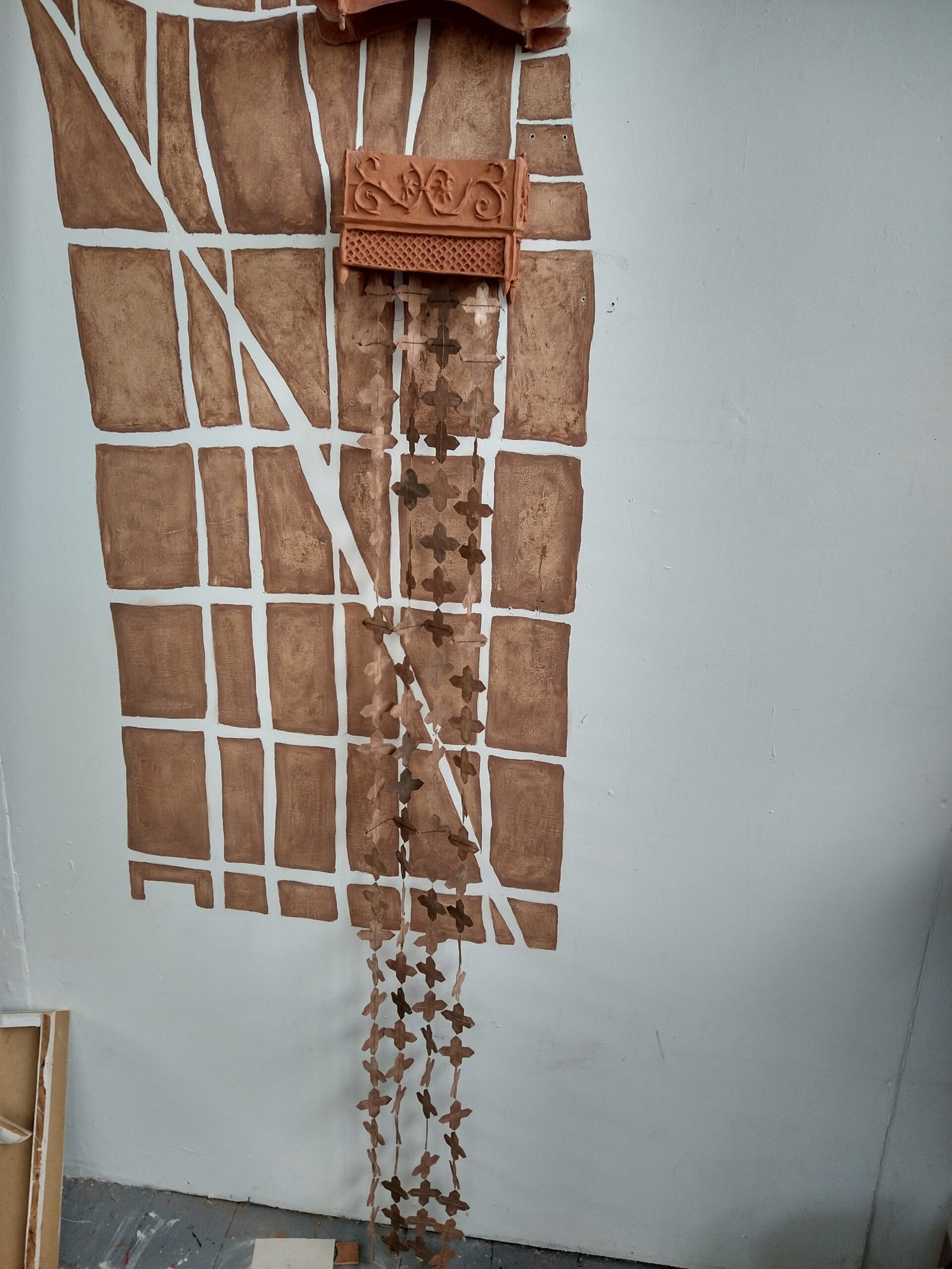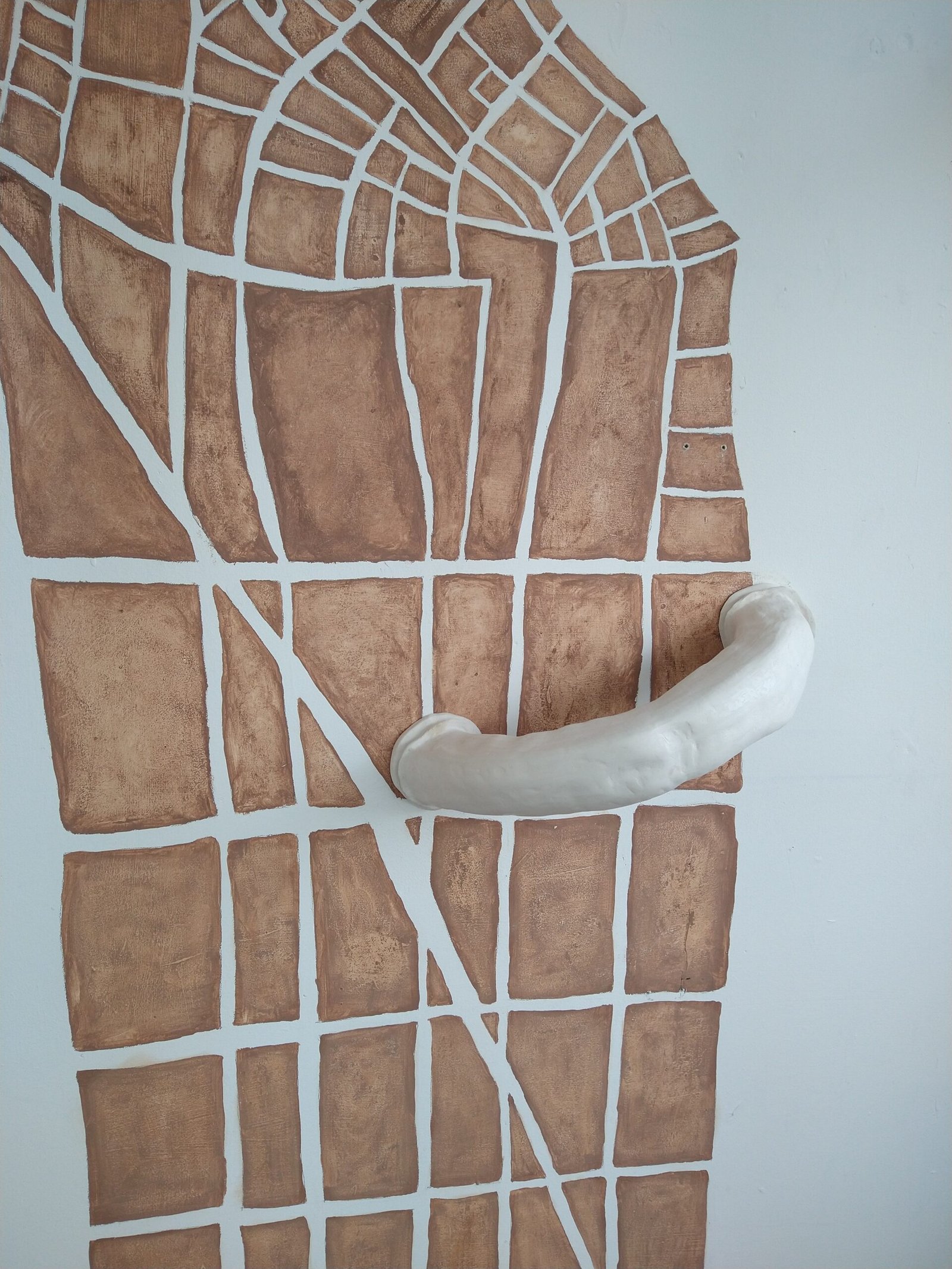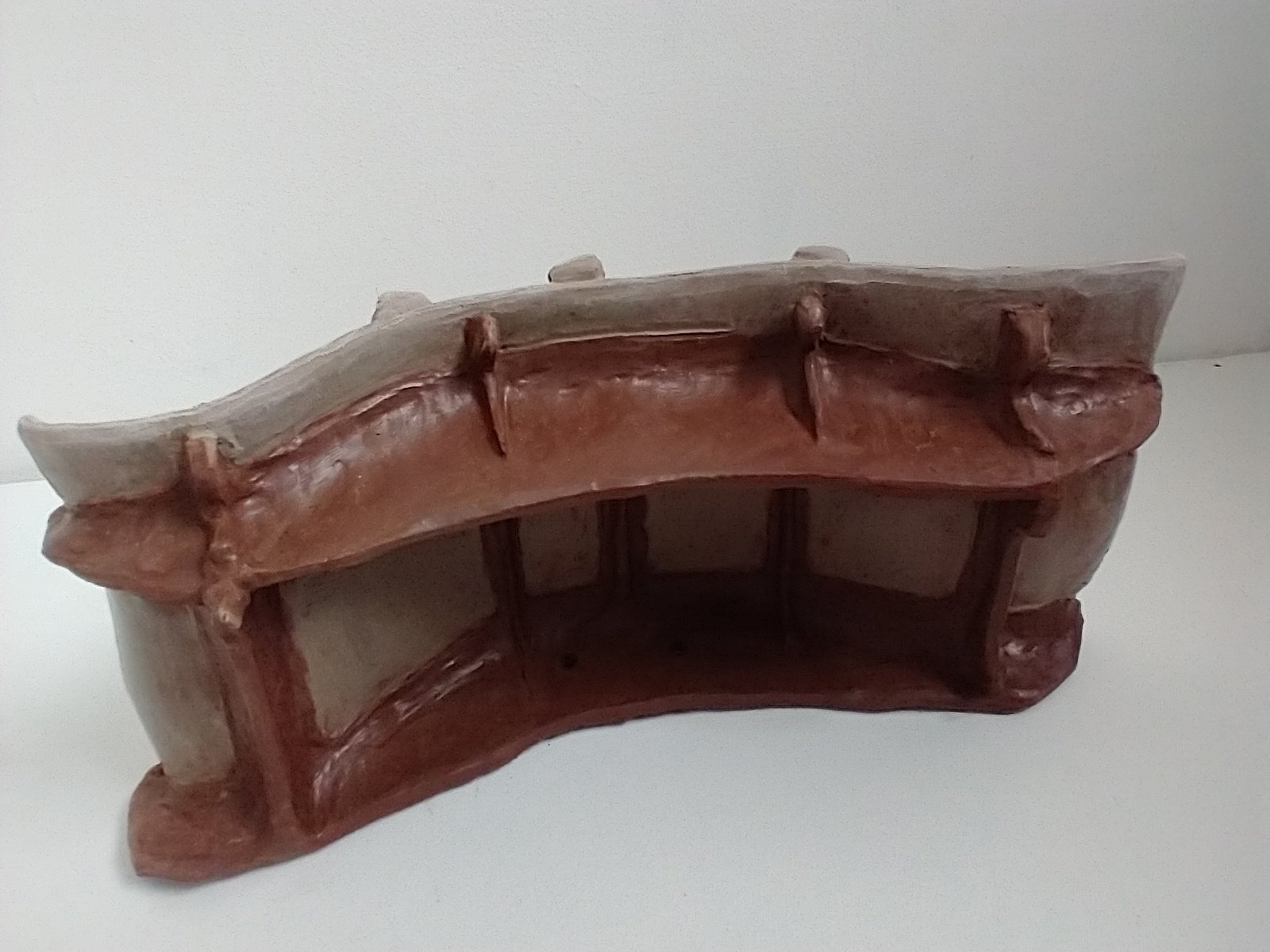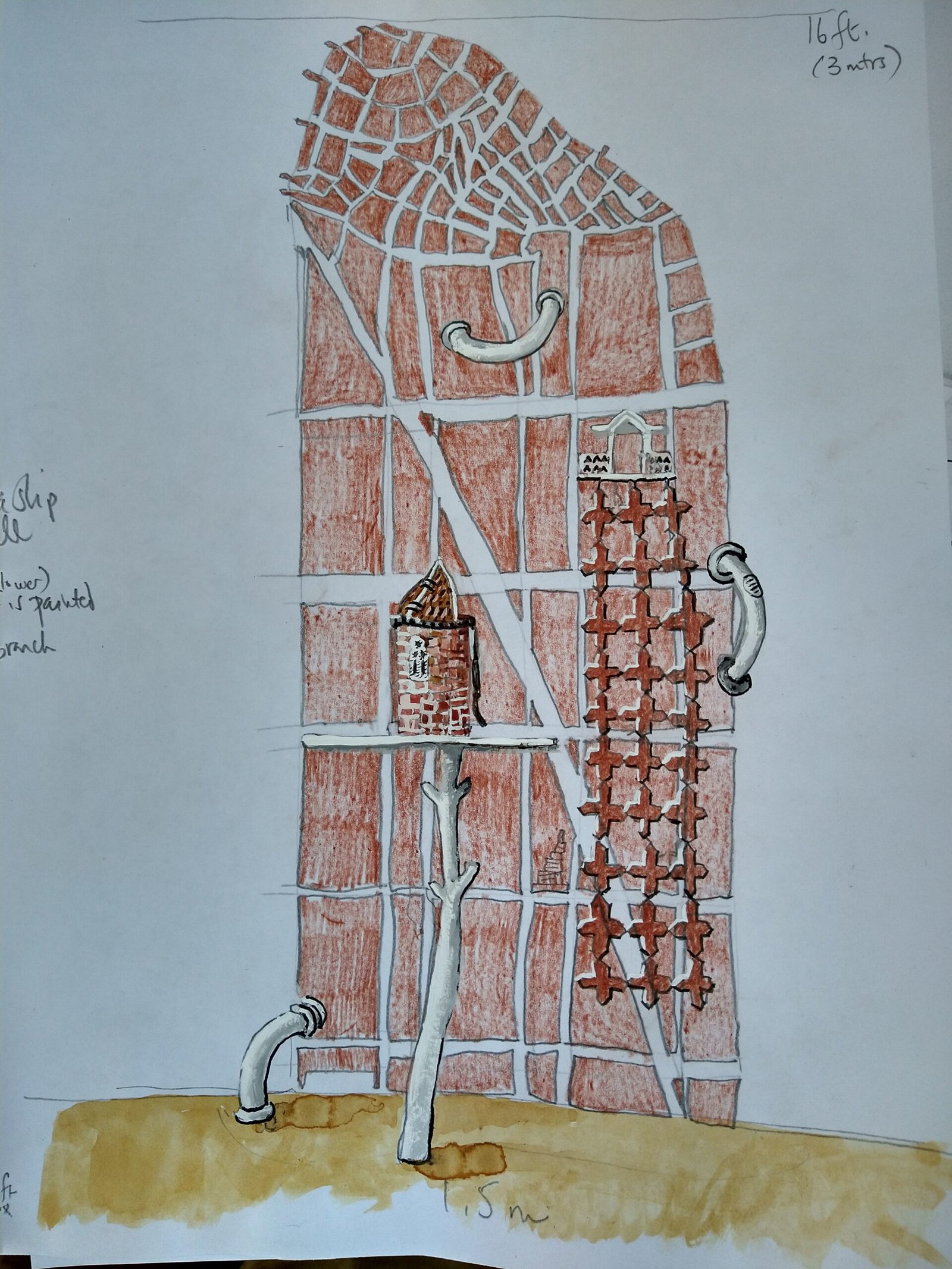
In this new work, Grid City, miniature clay buildings are set against a clay slip map whose form combines a modular, rectilinear system (associated with steel and concrete) with a more organic traditional pattern of urban growth..The surface holds the touch of its making.
The viewer is invited to reflect on our place in society as both particular and generalisable. Our dependence upon our natural environment is clear: The tower shelf is supported by a branch, pipe fragments emerging from the wall imply the extraction of ground water and its polluted return. The colour and material range suggest the emergence of our constructions from the earth that formed them.
Grid City raises questions about public and private space, what is shared, what is performative, what is secret, and how these aspects interact with status. The two constructions hold complementary urban behaviours. The doorless tower, at adult standing eye level, suggests seclusion, protection and imagined contents. Its architecture combines the sacred and the defensive.
The balcony is a space to aspire to. Perhaps to come out and wave to dmiring crowns below. Its great height, and ornate detailing, imply the power differential between its occupant and the ordinary resident on the ground. Based loosely upon the Mughal emperors’ Jharokha Darshan, a balcony for public audience, at which the ruler would show himself for an hour a day to reaffirm his vitality and power, and to receive the people’s petitions . These could be written on paper and sent up via a rope for him to adjudicate. The paper Jali (screen) that hangs below it moves in the breeze like those papers would have, creating a screen, and defining a way through,
simultaneously.
Photograph: Clio Lloyd Jacob, Grid City installation drawing 2026, Photograph by artist.